Showering with your child doesn’t have to be a struggle. In fact, it can become one of the most enjoyable bonding moments of the day.
If you’re looking for fun toddler bath time ideas or simple ways to make shower time easier, these three methods are practical, playful, and actually work.
Designed for toddlers and preschoolers (ages 2–6), these ideas focus on play, imagination, and stress-free cleaning. Just remember to supervise closely, use lukewarm water, and choose tear-free products.
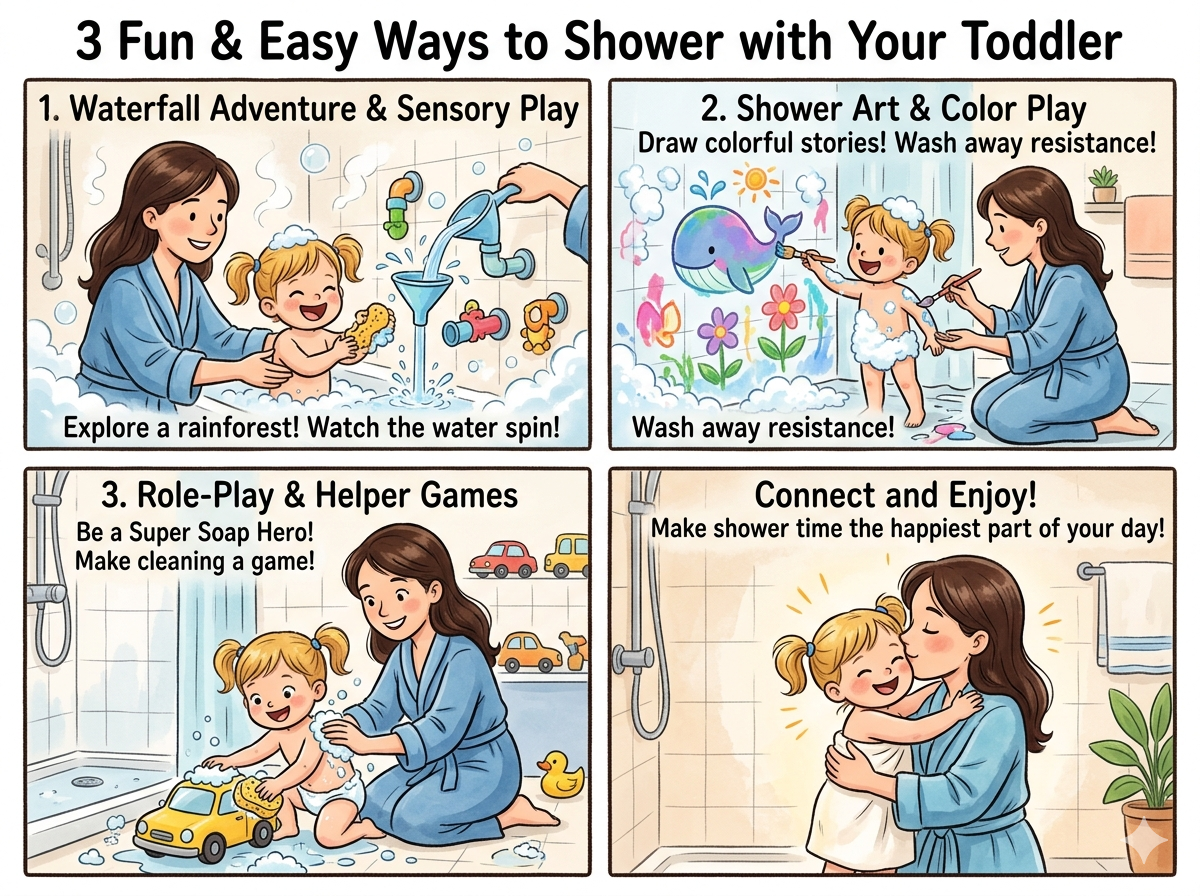
- Waterfall Adventure & Sensory Play
Turn your shower into a mini “waterfall playground.”
Attach simple suction-cup bath toys like pipes or spinning wheels to the wall. As water flows through them, kids can watch it move, spin, and splash—instantly grabbing their attention.
Give your child a cup, funnel, or squeeze bottle and let them pour water to “activate” the system. You can turn it into a story:
“We’re exploring a rainforest waterfall!”
While they’re busy playing, you can naturally wash their hair and body without resistance. Add some foam to create bubbly “clouds” for extra sensory fun.
This method works especially well because it keeps kids engaged, encourages cause-and-effect learning, and makes rinsing feel like part of the game. Most sessions take around 10–15 minutes and end with a clean, happy child.
- Shower Art & Color Play
If your child loves drawing, this one works like magic.
Use washable bath paints or simple DIY shower paint (like foam + food coloring) and let them draw directly on the wall or glass.
Encourage creativity with prompts like:
“Let’s draw a big whale!” or “What made you happy today?”
The key trick here is turning cleaning into part of the activity. Use the soapy paint to wash arms, legs, and tummy, then rinse everything away as a “magic erase” moment.
Kids who usually resist washing often forget about it completely during this activity. It also helps develop fine motor skills and imagination while keeping bath time stress-free.
- Role-Play & Helper Games
Sometimes, all it takes is a little imagination.
Turn shower time into a game where your child becomes the helper, hero, or caretaker.
For example:
“Car wash” game: You’re cars getting cleaned together
“Toy spa” game: Wash a doll or toy alongside your child
“Super soap hero”: Fight invisible “germs” with bubbles
You can also add simple songs like:
“Wash your toes, wiggle your nose!”
This approach builds cooperation naturally. Kids feel involved, proud, and more willing to participate—without feeling like they’re being told what to do.
Making shower time fun is less about perfection and more about consistency. When kids associate bath time with play and connection, resistance naturally disappears.
If you’re struggling with daily bath battles, try rotating these ideas and see what your child responds to best.
With the right approach, shower time can become one of the easiest—and happiest—parts of your routine.