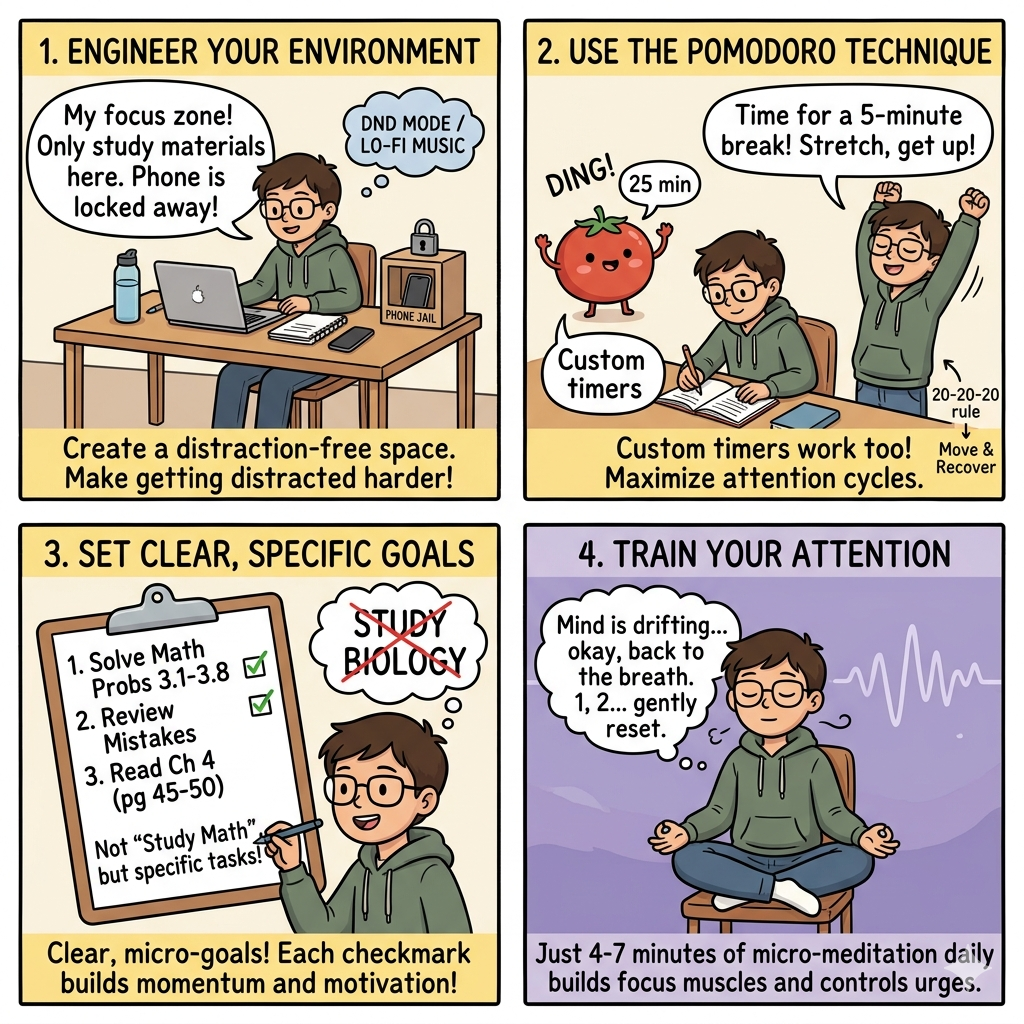
In an age of endless notifications, short-form videos, and multitasking myths, staying focused while studying has become one of the most difficult skills for students. The good news? Concentration is a trainable skill, not an innate talent. With the right systems in place, anyone can improve their ability to focus. Here are four evidence-based, practical methods that thousands of high-performing students use to build deep focus and study more effectively.
1. Engineer Your Environment to Remove Distractions and Improve Focus
Your surroundings either support focus or sabotage it. One of the most effective ways to stay focused while studying is to create a dedicated “focus zone.” Choose one specific desk or corner used only for studying—no gaming, no scrolling, no eating snacks there. Keep the surface minimal: just your notebook or computer, water, and the current material.
Next, eliminate digital distractions before you even sit down. Put your phone in another room or use a locked box. Turn on Do Not Disturb or grayscale mode if you must keep it nearby. Many students report 2–3× longer focus sessions simply by making distractions harder to access. As a bonus, play consistent background noise (rain sounds, white noise, or lo-fi music) to mask surrounding noise and signal that “study mode” has started.
2. Use the Pomodoro Technique to Maintain Study Concentration
The classic Pomodoro technique (25 minutes of focused study + 5-minute break) remains one of the most effective focus strategies because it aligns with natural attention cycles. But here’s the 2025 upgrade: customize the timer to match your current attention span instead of forcing 25 minutes.
If you can currently focus for only 18–20 minutes, start there. After each session, stand up, stretch, do light movement, or follow the 20-20-20 rule to reset your eyes. After four cycles, take a longer 20–30 minute break—ideally with fresh air or sunlight. This combination of movement and recovery significantly improves your next study session’s focus.
3. Set Clear, Specific Study Goals to Stay Focused Longer
“Study math” is too vague for your brain. “Solve problems 3.1–3.8 and review mistakes” is clear, actionable, and gives you a defined finish line. Before every study session, write 2–4 specific micro-goals on a note.
Checking off these small goals creates quick wins that boost motivation and help you stay focused longer. It also eliminates the common feeling of “I studied for hours but got nothing done.” When your goals are specific, your progress becomes visible—and that momentum builds stronger focus over time.
4. Train Your Attention with Daily Micro-Meditation
Many people underestimate meditation, but even 4–7 minutes of daily practice can significantly improve focus and attention span. Research from 2023–2026 consistently shows that short, breath-focused meditation helps strengthen concentration.
A simple method: sit upright, close your eyes, and count your breaths from 1 to 10, then repeat. When your mind wanders—and it will—gently bring your attention back without frustration. Practicing this daily, especially before studying, helps you recognize distractions faster and return to focus more easily.
Mastering how to stay focused while studying isn’t about willpower—it’s about systems and consistency. Start with just one of these methods and apply it this week. Track how long you can stay focused before your first distraction. Most students notice real improvement within 7–10 days.
Which of these methods will you try first?