Living with a roommate can be one of the most rewarding—or stressful—experiences.
Small annoyances like dirty dishes, loud music at 2 a.m., or borrowed items never returned can quickly turn into serious conflicts.
The good news? Most roommate problems are preventable with the right habits.
Here are four realistic and proven strategies to avoid roommate conflicts and maintain a peaceful home.
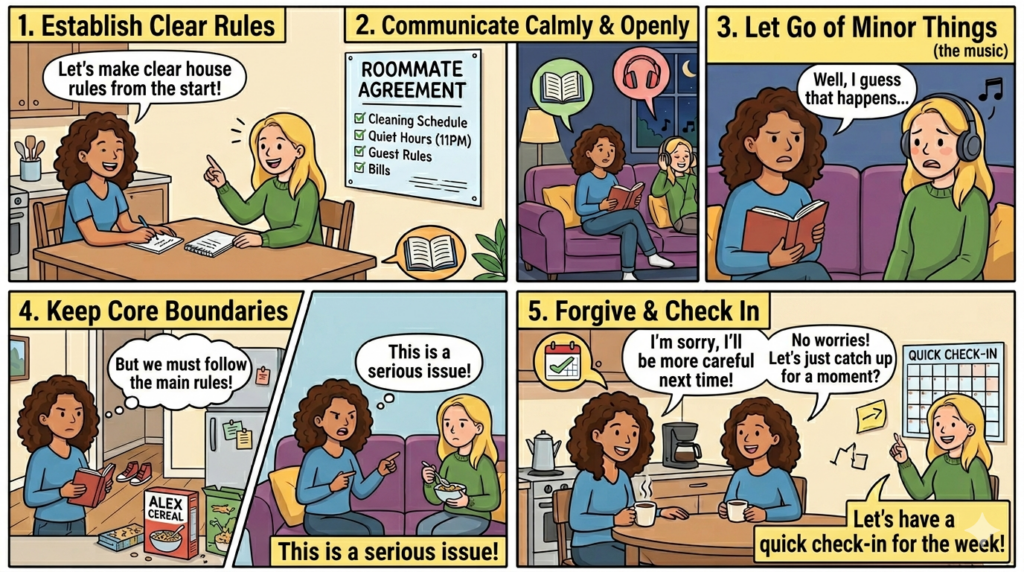
1. Set Clear Ground Rules from Day One
One of the biggest mistakes roommates make is assuming things will “just work out.”
Instead, have an open conversation early—ideally before or right after moving in.
Discuss key topics like:
- Cleaning responsibilities
- Quiet hours
- Guest policies
- Food sharing
- Bill payments
- Personal boundaries
Write everything down, even if it’s just a shared note.
Clear agreements prevent misunderstandings and make expectations obvious.
Revisit these rules every few months to keep things fair as lifestyles change.
2. Communicate Early and Kindly (Before Problems Grow)
Most roommate conflicts don’t start big—they grow from small, ignored frustrations.
If something bothers you, bring it up calmly and early.
Use “I” statements to avoid sounding accusatory.
For example:
“I feel distracted when there’s noise after 11 p.m. because I wake up early. Could we use headphones?”
This works much better than blaming language.
Also, timing matters.
Avoid serious conversations when emotions are high or when someone is busy or tired.
3. Respect Boundaries and Choose Your Battles
Everyone has different standards for cleanliness, noise, and personal space.
Learn what matters most to your roommate—and share your own boundaries too.
Making small adjustments shows respect and prevents tension.
At the same time, not everything is worth arguing about.
- Shoes in the hallway → probably minor
- Eating your food without asking → worth addressing
Choosing your battles wisely helps maintain a healthy living environment.
4. Practice Forgiveness and Reset Regularly
No one is perfect, and mistakes will happen.
When they do, a simple and sincere apology can prevent long-term tension.
Letting go of small issues is just as important as addressing them.
Some roommates benefit from quick weekly check-ins like:
“Is everything okay? Anything bothering you?”
This habit keeps communication open and prevents problems from building up.
Conclusion
Roommate relationships don’t require perfection—they require communication and mutual respect.
By setting clear rules, addressing issues early, respecting boundaries, and practicing forgiveness, you can significantly reduce conflicts.
In the end, a peaceful home isn’t about avoiding disagreements—
it’s about handling them in a healthy and respectful way.