Spring and early summer bring beautiful blooms—but they also trigger allergy symptoms like sneezing, itchy eyes, and congestion. If you’re struggling with seasonal allergies, reducing pollen exposure at home is one of the most effective ways to feel better fast.
Pollen from trees, grasses, and weeds can easily enter your home and circulate in the air. The good news? With a few simple habits, you can significantly lower indoor pollen levels and create a cleaner, more comfortable living space.
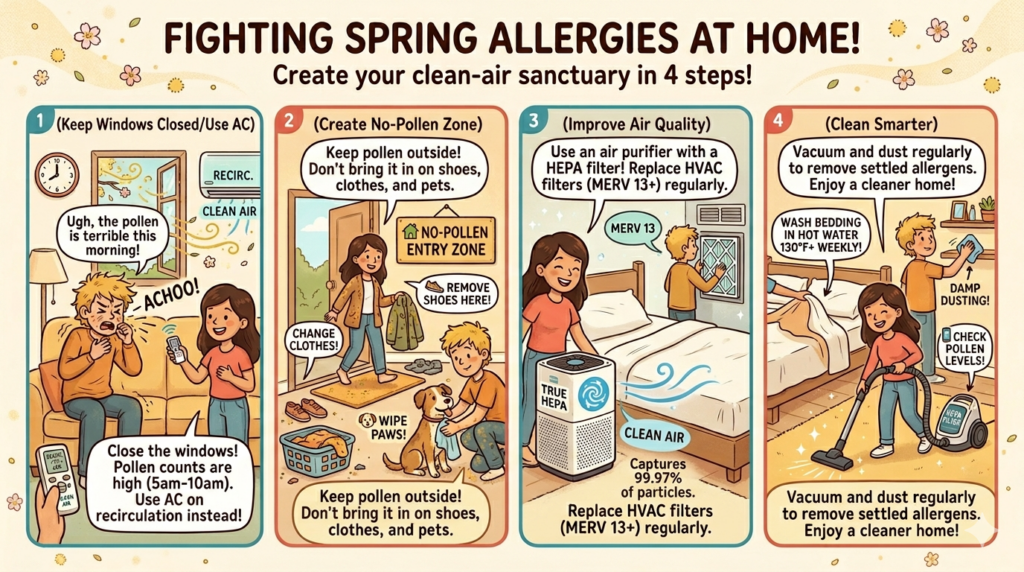
1. Keep Windows and Doors Closed During Peak Pollen Hours
One of the easiest ways to reduce indoor pollen is to block it from entering in the first place. Keep windows and doors closed, especially between 5 a.m. and 10 a.m., when pollen counts are typically highest.
Instead, use air conditioning with recirculation mode. This helps cool your home while filtering out airborne allergens and maintaining cleaner indoor air.
2. Create a “No-Pollen Entry Zone” at Home
Pollen doesn’t just float in—it sticks to shoes, clothing, hair, and even pet fur.
To prevent pollen buildup indoors:
- Remove shoes at the entrance
- Change clothes immediately after coming home
- Shower or wash your face and hair before bed
If you have pets, wipe their paws and brush their fur before they come inside. This simple habit can dramatically reduce how much pollen spreads onto furniture and bedding.
3. Improve Indoor Air Quality with HEPA Filtration
Air filtration plays a critical role in controlling pollen indoors.
- Use an air purifier with a true HEPA filter in bedrooms and living areas
- Replace HVAC filters every 1–3 months
- Choose filters rated MERV 13 or higher
HEPA filters can capture up to 99.97% of airborne particles, including pollen, dust, and other allergens.
4. Clean Smarter to Remove Hidden Allergens
Regular cleaning helps eliminate pollen that has already settled inside your home.
- Vacuum weekly using a HEPA-filter vacuum
- Use a damp microfiber cloth for dusting
- Wash bedding weekly in hot water (at least 130°F / 54°C)
- Use allergen-proof covers for pillows and mattresses
- Avoid drying laundry outdoors during pollen season
These small habits prevent pollen from accumulating and recirculating in your living space.
5. Control Humidity and Reduce Allergen Traps
Maintaining the right indoor environment can prevent allergy symptoms from getting worse.
- Keep humidity below 50% using a dehumidifier or AC
- Reduce carpets and heavy curtains that trap allergens
A cleaner, less cluttered home means fewer places for pollen and dust to settle.
Bonus Tip: Track Daily Pollen Levels
Check your local pollen forecast using weather apps. Plan outdoor activities for late afternoon or after rain, when pollen levels are typically lower.
Reducing pollen exposure at home doesn’t require expensive upgrades—just consistent, smart habits. By sealing your home, improving air filtration, and cleaning effectively, you can create a noticeably healthier indoor environment.
Even small changes—like closing windows or upgrading your filter—can make a big difference within just a few days.
Start today, and enjoy a cleaner, easier breathing space all season long.