In today’s fast-paced world, tension and anxiety have become constant companions for many people. From work pressure to endless notifications, stress can quickly overwhelm both your mind and body.
The good news? You don’t need expensive therapy or medication to feel better. By using simple, science-backed techniques, you can reduce anxiety naturally and feel more relaxed every day.
Here are four proven ways to calm your mind and release tension.
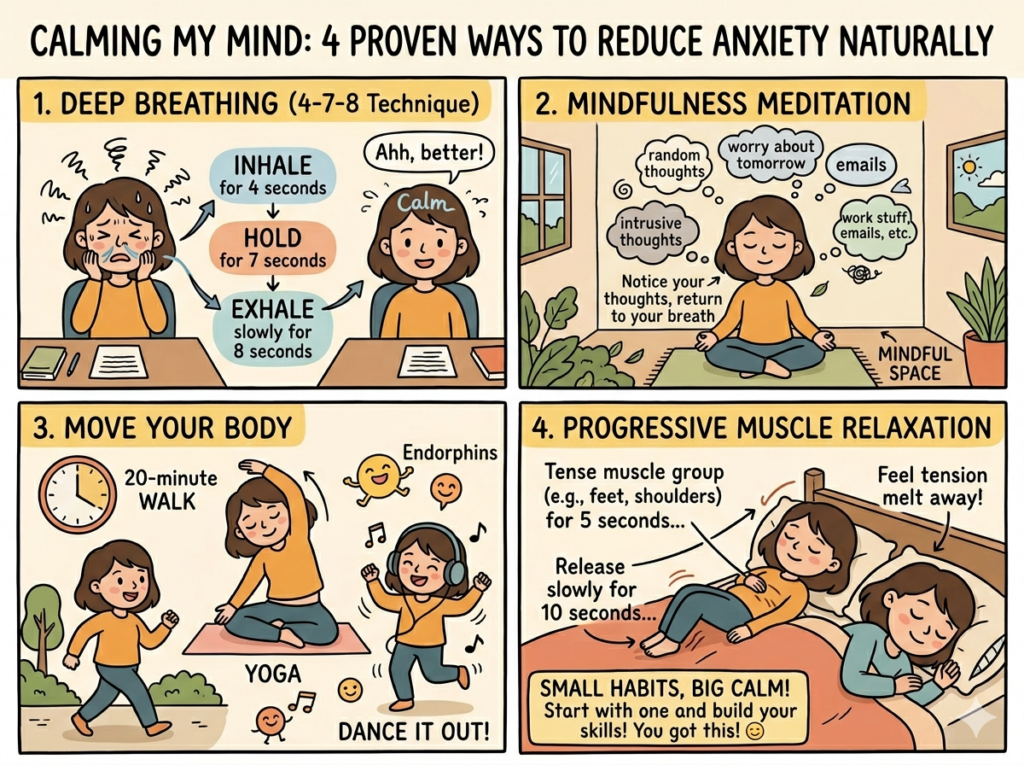
1. Deep Breathing to Calm Your Nervous System
One of the fastest ways to reduce anxiety naturally is through controlled breathing. When you’re stressed, your breathing becomes shallow, keeping your body in “fight or flight” mode.
Try the 4-7-8 breathing technique:
- Inhale through your nose for 4 seconds
- Hold for 7 seconds
- Exhale slowly through your mouth for 8 seconds
Repeat this cycle four times.
This method helps activate your parasympathetic nervous system, slowing your heart rate and reducing stress hormones almost instantly. It’s a quick and effective way to relax anytime—at your desk, before sleep, or during stressful situations.
2. Mindfulness Meditation for Anxiety Relief
Mindfulness meditation is one of the most effective ways to relax your mind and reduce anxiety naturally. Even just 10 minutes a day can make a noticeable difference.
Sit comfortably, close your eyes, and focus on your breathing. When thoughts arise, simply notice them without judgment and gently return your attention to your breath.
Over time, this practice helps you create distance from anxious thoughts instead of being overwhelmed by them. Studies show that mindfulness can reduce activity in the amygdala—the part of the brain responsible for fear and stress.
3. Move Your Body to Release Stress
Physical movement is a powerful and natural way to reduce anxiety and improve your mood. Exercise releases endorphins and serotonin, which help you feel happier and more relaxed.
You don’t need an intense workout. Try:
- A 20-minute walk
- Light stretching or yoga
- Dancing to your favorite music
The key is consistency. Regular movement helps release built-up tension and gives your mind a break from overthinking.
4. Progressive Muscle Relaxation (PMR)
Progressive Muscle Relaxation is a simple technique that helps you identify and release physical tension in your body.
Start from your toes and move upward:
- Tense each muscle group for 5 seconds
- Slowly release for 10 seconds
As you relax each area, focus on the feeling of tension melting away.
This method is especially helpful before bed and can improve sleep quality by calming both your body and mind.
Final Thoughts: Small Habits, Big Calm
Reducing anxiety doesn’t require drastic changes. Small, consistent habits can make a powerful difference over time.
Start with just one technique that feels easy and build from there. With practice, your mind and body will learn to respond to stress with calm instead of tension.
Remember, relaxation is a skill—and like any skill, it gets stronger the more you practice it.