As winter fades and spring arrives, many people look forward to cherry blossoms, warmer temperatures, and longer daylight hours. However, this seasonal transition can also bring various health challenges that can affect your immune system.
Fluctuating temperatures, increased pollen levels, dry air, and fine dust can weaken your immune system if you’re not careful. The good news is that with a few simple habits, you can stay healthy and enjoy spring to the fullest. Here are four essential precautions to help you navigate the changing seasons.
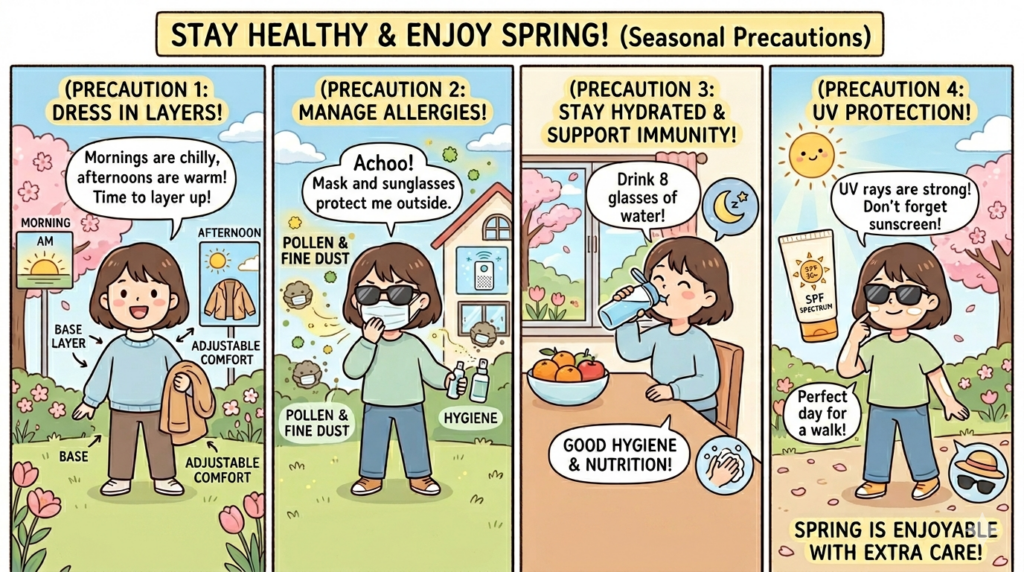
1. Dress in Layers to Handle Temperature Swings
Spring weather can shift dramatically within a single day. Mornings may feel chilly, while afternoons become warm and comfortable. Because of this, layering your clothing is one of the most effective ways to stay comfortable and prevent illness.
Start with a breathable base layer, add a light sweater or fleece, and carry a jacket or windbreaker. This allows you to easily adjust to temperature changes and avoid sudden chills in the evening.
Even if the daytime sun feels warm, avoid dressing too lightly. Maintaining a stable body temperature is one of the simplest ways to reduce your risk of catching a cold.
2. Manage Allergies and Reduce Pollen Exposure
Spring is peak season for pollen, which can trigger symptoms like sneezing, itchy eyes, and nasal congestion. To minimize exposure, try to limit outdoor activities during high-pollen times, especially early morning and late afternoon.
Wearing a mask outdoors, keeping windows closed, and using a HEPA air purifier indoors can significantly reduce allergens. After returning home, showering and changing clothes helps remove pollen from your skin and hair.
If you have seasonal allergies, starting preventive medication early—after consulting a doctor—can make a noticeable difference.
3. Stay Hydrated and Support Your Immune System
Dry air during seasonal changes can irritate your throat and respiratory system, making you more vulnerable to infections. Staying hydrated is essential—aim for around 8 glasses of water per day.
Good hygiene also plays a key role. Wash your hands regularly, avoid touching your face, and keep your indoor environment clean and well-ventilated.
In addition, focus on immune-supporting habits such as eating fruits and vegetables, getting enough sleep, and managing stress. Small daily habits can significantly strengthen your body’s defenses.
4. Protect Your Skin and Eyes from UV Rays and Fine Dust
Spring sunlight may feel mild, but UV exposure is still strong enough to damage your skin. Apply a broad-spectrum sunscreen (SPF 30 or higher) daily, even on cloudy days.
Fine dust and pollen can also irritate your eyes and lungs. Wearing sunglasses and a protective mask on high-dust days can help reduce irritation. If dryness occurs, consider using moisturizer or artificial tears.
Spring is one of the most enjoyable seasons, but it also requires a bit of extra care. By dressing appropriately, managing allergies, staying hydrated, and protecting yourself from UV rays and dust, you can avoid common seasonal health issues.
Make it a habit to check daily weather and air quality updates, and listen to your body’s signals. With the right precautions, you can fully enjoy outdoor activities like picnics, walks, and flower viewing—without compromising your health.